
The 'C' Word
Howie Good
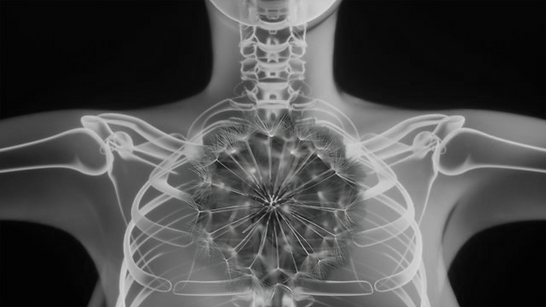

this is a
right hand pointing
chapbook
copyright © 2026 by Howie Good.
All rights reserved.

The Cure
I was given an impossible choice and almost no time to make it. The doctors in the room stared at me, expecting an answer now. I thought back to the young children with old faces I had seen being taken in wheelchairs for another round of radiation, all so uniformly gray and bald and shriveled I couldn’t distinguish the girls from the boys. In my desperate state of mind, I wanted to believe the doctors when they said the treatment would deliver radiation to the area of my tumor with pinpoint precision. Know what it was really like? The hunter in Maine who shot and killed a woman hiker he somehow mistook for a deer.

A goodwill attempt had been made to brighten the waiting room of the Radiation Oncology unit, located in the hospital basement, by hanging kitschy paintings of flowers on the walls. But better art or even actual flowers wouldn’t have lifted the prison dungeon atmosphere of fear, fatigue, and pain. Anyone waiting on the chairs lining three sides of the room—a check-in area filled the fourth side—was either a cancer patient scheduled for radiation or someone guilted into accompanying them. I often sneaked glances at the other patients. If they weren’t old when treatment started, they looked old and shriveled now under the harsh fluorescent lights. Some dozed. Some trembled uncontrollably. Some conversed in whispers. A few had a book or magazine open on their laps while staring into space. I was one of them, all of them, stopped at the border between life and death, a border that was being continuously fought over. Once, cancer was just a word. It wasn’t just a word anymore.
The "C" Word


Figments
I lay face down on the table, shirtless, shoeless, and under orders to stay still. My tumor had been surgically removed a month earlier, but cancer cells might be lurking about, and so I was being treated now with radiation. I felt strangely detached from the treatment, almost as if it was happening to someone else. It’s called dissociation, the mind’s way of coping with trauma, and it’s common among cancer sufferers and survivors. We’re the nearest neighbors of the dead. Graveyard dirt clings to us. Our old lives of relative health and happiness seem like figments, the hazy remnants of a curious dream.

Music was usually playing when I entered the radiation lab. Billy Joel, Wings, Elton John. The kind of heavily processed mainstream stuff that plays in the background in supermarkets. One day a radiation tech asked if there was anything I wanted to hear. “The Ramones?” I suggested. Presently Joey Ramone was yowling “Blitzkrieg Bop” from the speakers. After a month of radiation treatment, I had become acclimated enough that no matter what music was playing, the low, hypnotic hum of the linear accelerator, the machine delivering the radiation, sometimes lulled me into a twilight sleep. I didn’t quite dream. It was more like I was face down in a sun-warmed pool doing the dead man’s float. At any rate, the next day there was no music and no one asked if I wanted to hear any. There was only me stretched out on the table in semidarkness, fully awake and scourged by the breath of a fire-breathing dragon.
The Day
the Music Died

Scanxiety

Time has no fixed shape of its own; it assumes the shape of what you do with it. Every six months I go to the hospital for a CT scan to determine whether my cancer has recurred. Cancer survivors who follow this or a similar protocol sometimes suffer from “scanxiety.” We experience a feverish anxiety just before scans, during scans, and while waiting for scan results. The scans dredge up humiliating memories of helplessness and fear associated with our initial cancer diagnosis—basically, retraumatize us. Sirens whoop. A shiny black limousine appears. Death nods and waves from the backseat to the silent crowds along the route.

The CT scan machine is shaped like a donut. I’m lying inside the hole of the donut on my back. Bugs lie on their backs when they are dying. I was injected moments earlier with a radioactive contrast agent. A burning sensation spread through my body. Now the machine, with a brilliant flash of light, scans my chest, abdomen, and pelvis for new tumors. In an adjacent room, techs are monitoring the images on a screen. They see shadows and ghosts. They see mounds of rubble. They see the name of the girl with mismatched eyes, one green, one blue, who sat behind me in ninth grade homeroom.
Shadows and Ghosts

In the Event of My Demise
I don’t sleep well. How could I? I’m worried all the time, and the media are continuously adding to the list of reasons I should be. Yesterday, during the hours-long wait between the CT scan and an appointment to review the results with my oncologist, I made a pillow of my arms on a table in the hospital cafeteria and lay my head down. I fell instantly asleep. The coffins of martyrs were carried through dusty, sunbaked streets amid the hysteria of black-robed mourners.

On the first Monday of every month, I attend a cancer support group with about a dozen other men, some struggling with the malicious physical side effects of radiation or chemo, others with a kind of PTSD. We represent an impressive array of cancers: prostate cancer, colon cancer, anal cancer, breast cancer, lung cancer, bone cancer. One man recounts an episode of shitting blood. Another mumbles about his medication-induced sexual impotence. A third looks around the table with red-rimmed eyes as he bemoans his chronic insomnia. I’m overcome with shame. My complaint is existential. I’m haunted by the fear—more than fear, the expectation—of my cancer recurring. All it takes is one deranged cell to trigger the disease process. People who talk about “beating cancer” never had it. You don’t “beat” cancer. Even if you survive it, you don’t escape it. Not every prison requires guard towers and high walls.
Talking Cancer Blues
Sweater Weather
“Are you a back sleeper or a side sleeper?” the mattress salesman asked, pretending to be interested in the answer. Actually, I had dreamed my tumor reappeared on my back. “Why would you do this to me?” I scolded. All living things are programmed to wither and die and be replaced by facsimiles. Already it’s sweater weather at night. My only brother-in-law is on life support in the ICU, a junk car up on cinder blocks.


I’m asked the same questions every time I go, and every time I go, I give the same answers. Yes, I have been depressed lately. Yes, I have difficulty taking pleasure in things. Yes, I have had thoughts of suicide. A medical assistant enters my answers on her tablet. Or maybe not. The system that requires someone to ask the questions apparently doesn’t require anyone to evaluate the answers. And so far, no one has. It’s like being lost in a city whose streets don’t connect to each other or the larger world and where, in the shadow of a doorway, a man gives a final shake, then zips up.
Q&A

A Gift

The medical assistant asked if I had fallen in the last three months. I lied and said no. Life, people say, is a gift. Maybe it is, and I’m the crumpled festive wrapping paper. People I have known a long time call me by the wrong name. The thousand or so poems I have written make a harsh sobbing sound. When I look in the mirror, the face looking back isn’t one I recognize. Gray complexion. A high boney forehead. Nose like a prow. Pennies on the eyes.
X's for Eyes

The night I passed out I was alone in the house except for the dogs. When I woke up, I was lying on the kitchen floor, my clothes covered in vomit. A small cut over my eyebrow was oozing blood. I have no idea how long I was out but at least long enough for the area around the cut to swell into a considerable bump. The dogs proved no help at all—unless trying to lick the vomit off my shirt qualifies as helping. To see myself as I am, a broken man, is to remember myself as I was, a boy his parents crumpled up and his teachers threw away. A hundred years from now, maybe less, every person who knows me will be dead. I won’t even be a memory stored in someone’s brain. “Don’t look too far ahead,” the therapist says on Zoom. “Focus on today.” Today the dogs got me up early for a walk. Dandelions grew between the sidewalk cracks.
Donations of appreciation of Howie's chapbook will flow from our nonprofit press to the American Cancer Society Hope Lodge program which provides a free home away from home for cancer patients and their caregivers. Add a note to your donation: "Howie Good."


Howie Good
is a professor emeritus at SUNY New Paltz whose latest poetry books are The Dark, Akimbo, and True Crime, all published by Sacred Parasite Press. He co-edits the online journal Unlost, an Ambidextrous Bloodhound Press journal dedicated to found poetry and art.
Images
Dale Wisely (cover collage. incorporating photos by Ed Stone and Rohit Choudhari)
National Cancer Institute (edited), "Scanxiety"
Edu Bastidas, "Sweater Weather"
Ed Stone (edited), "X's for Eyes"
all images via Unsplash.com