
.jpg)

The Note
The science fiction author William Gibson has a pair of recent novels, The Peripheral and Agency. A third novel in this trilogy, titled Jackpot, is said to be on its way. Gibson is known for having been strikingly prophetic. For example, he coined the term “cyberspace” to describe a worldwide, interconnected digital network—in 1982.
The Jackpot trilogy, as fans call it, is set in a post-apocalyptic, not very distant future. Of course, there are more post-apocalyptic books, films, and stories than anyone can count. But Gibson takes a different approach in describing what the apocalypse is in these novels. It is not a nuclear war, not a deadly pandemic, not a climate catastrophe—or, better, not any one of those alone. Gibson’s apocalypse, which he ironically calls “the Jackpot,” refers to a slow collapse unfolding across the 21st century: not a single apocalyptic event but a convergence of disasters—pandemics, climate change, economic inequality, ecosystem collapse, political instability, and mass extinction. (A note for fellow language geeks: Gibson is only the second person I’ve heard use the usually cheerful term “jackpot” to refer to a very bad situation. The other was Cormac McCarthy.)
I don’t need to explain to the people reading this why I’m starting to think that William Gibson may be showing his prophetic ability again. Looking at that list of disasters and comparing it with the present news should do the job.
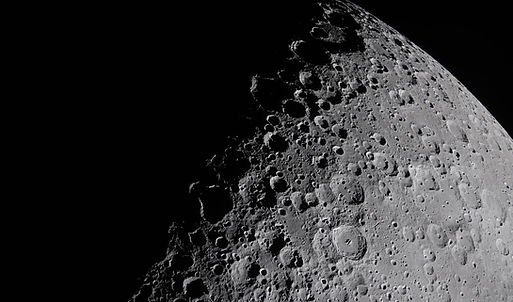
I’m writing this the day after I took Easter Monday off to watch, among other things, the coverage of Artemis II’s loop around the moon, during which the highly articulate crew ran out of superlatives to describe what they were seeing out their window. You may have heard about one particular moment. Keying up the radio to speak to Houston, one of the crew members, Jeremy Hansen, proposed on behalf of the crew that an unnamed lunar crater be named “Carroll,” after the wife of fellow crew member Reid Wiseman. Carroll, the mother of his two daughters and a pediatric nurse practitioner, died of cancer not long ago. As Hansen spoke about his colleague’s late wife, something rare for astronauts happened: his voice broke with emotion. Wiseman reached out and squeezed Hansen’s shoulder; the gesture then yielded to a microgravity embrace, and then a floating four-way hug among the crew.
All the terrible tragedy and awful foreboding in the world coexists, as it always has, with moments of almost unbearable beauty: the beauty that falls upon human eyes when four people gaze at the moon up close, made possible by the collective genius of scientists, engineers, and technicians; the beauty we witness when people hold one another, weep together, and love one another.
It is central to our lives to live within these dualities: genius and bottomless stupidity, evil and good, love and hate, gravity and weightlessness, Earth and moon.
-//-
We send our love and thanks to editor Annie Stenzel, who has retired from the staff of Right Hand Pointing. What a lovely and gifted person. We welcome Ken Chau to the team, who many of you know from his able leadership as chief editor over at Unbroken and co-editor at Unlost. Ken anchors Ambidextrous Bloodhound's Australian bureau and does so cheerfuly, despite the fact that I cut that office down to 68 interns. The good news is that Ken's additional responsibilities earns him an upgrade of his Ambidextrous Bloodhound dental to include some molars.
My thanks, as always, to our editorial team, to all who submitted to Right Hand Pointing this round, and to all the contributors whose work appears in this issue.
Love,
Dale

Jeremy Nathan Marks
North shore
Women in north
shore towns wait
for no man they
Make eyes at
the salt in their lives
while sailors
Pine for carp
Shore-bound
trees tell you
who they are
By the color
of their leaves
the crack
Of their nuts.

Corey Mesler
Back
for Sue
In our bathing suits
my sister and I
would play Monopoly
at the picnic table
in our backyard
on the patio my
father poured and
graded not forgetting
to add the date and
his children’s names
before the concrete set.
Telephone Exchange
I still remember the telephone
exchange
and number from my
childhood.
Evergreen, it began.
Once I tried to call it.
A ghost
answered and ever since then
I find myself
voiceless, bereft, just not myself.

Mark A. Hill
Jarred
our state is a studied tempered way, spring
might fall, the all is since you
jarred with me on
the 12th of may I fever
and act like this,
cut in you forever.
Elissa Matthews
As I Wash Dishes
There’s not enough stuff to run the dishwasher
anymore.
A few plates.
Some forks and spoons.
One cup
which I use all day, rinsing it as I move
from morning coffee to green tea in the afternoon
to cocoa at night.
I wash my dishes by hand now.
I don’t bother with rubber gloves.
I make a small cairn on the draining board,
one last task at the end of day,
between me and the bed where no one waits.
Trish Saunders
Flying Through Time
I know how to plant disquiet deep,
like a long-dead mare
turned loose in a field
to mingle with bones
of flying pterosaurs
ground to powder
eons ago, like grandma's
gilt compact. I know how chests
of small children waken at three a.m.
to fly with the horses.
Softly, the Louisiana rain
opens my window.
Ricardo Bernhard
Vanishing Game
A pawn spins, topples, sinks. Dressed in a burgundy swimsuit, a girl approaches, faltering on the way with a cry. He closes his eyes when offered the piece, which is returned to the sand. The light, the air—a melting, soundless harp trembling right above the sea. He goes back to it, there is something there. On his chest, a sun-forged seal pinches his skin like ethereal mercury on an invisible wound. He will keep shooing away the vendors who stab their umbrellas next to him. No shade is due when there is nothing to be protected. Can’t they see the beige grains overtaking the board, the white pieces starting to appear as discarded corks in a miniature desert? For all he cares, his phone can melt or crack under the sun, from screen to glass to debris. He would never look it up. His palm-tree-sprinkled trunks and sunset-colored tee shirt and Brazilian-flagged flip-flops... hoodlums, take them. Enjoy. He is here for a game, but there is no game for him. Cellar, sold. Life, draining. Excuses more unsubstantial than the droplets of seawater that rise powerlessly into the undulating air. Failed by his opponent, his first friend, at the final rank. He will wait for the sky to turn from bright to dark, and back again, until a checkered dome is all he sees. A spot in the immensity will then feel so natural, that he will slip onto it, his board undone, his pieces scattered, a stilled hollowness that would surprise anyone striding along the shore.
Richard Fox
The Morning Air
Just for you, the rain has opened up
the Siberian irises; the hawthorn,
dancing at the other end of the lawn,
have memorized you in Braille.
Just for you, lists of bridges spanning
these United States, & for those
crossing water, flocks of mallards under
them, on the water & in the morning air.
Hilary Sideris
His Next Life
Since we split, each day he comes
to focus on the little things
we bought on trips to Greece
& Rome—Minoan bull from Crete,
Caravaggio cappuccino cups.
He’s grown a beard. I think
of Bronze-Age kings interred
with gold death masks,
lapis from Afghanistan, Baltic
amber, Black Sea amethyst.
Meticulous as he made art
before he quit, he packs his half
in boxes with his new address—
smaller, darker, down the street.
Claire Booker
The Underside
We roll away the concrete cobble,
and from our aerial view, observe
a baby slowworm and snake-hatchling
looped together, sleep-spun—
hairline joy caught between patio rubble
and buckled roots of our harlequin rose.
Not rivals yet, nor even enemies,
they use each other’s warmth to survive.
I feel like the Pharaoh’s daughter—
a wonder revealed, safe in its stony basket
under yellow buds and blood-red blooms
that flame against the fence.
We set the cobble carefully back in place.
So easy to crush fragile bodies.
orha
from this wicker chair
blue skies and green fields flatten
the backdrop for birds
Jared Frank
resentimentalism
to care about people
you hate
enough to look them up
every once and a while
just to make sure
you're doing better than them
quartz shadows
to love deeply:
sculpt the space between
into a pedestal
Ewen Glass
Positive
The abaxial
side of leaves,
water retained
for hope,
which sleeps
in the dark;
wakes recharged.
Aerin Higginbotham
Body Scan
My legs are underground
nourished in the cool soil.
Toes fold into the clay and rocks.
I wear the earth like a skirt.
Inhale worm dirt fog,
coaxed by yesterday’s down pour.
Silk petals cook deliciously,
swirling between my pubic bone and ilia.
My noise permeates a deep steady hum
as the sun drinks the essence
to my head. Gathering under
the dome-shaped sky, under my little hairs,
passing my grape stem lungs,
conch shell throat.
My time in the swamp has paid off.
Now look what I am.
K. Alma Peterson
The Trees Mistrust the Tenor of the Wind
This summer the heat of war
and the torture of democracy
trigger even the natural world to wonder
if the winds of change themselves
have changed, no longer counter-force
to corruption and its dismissal as normal.
Last night the oaks were blown at odds
with their mantle of withstanding
doubts, of sustaining their interplay
with this advancing rush to ruin
it will be said started with the acorns
refusing to take root in corrupted ground.
J.I. Kleinberg
Stone
Apothecary stone, no smoother
where I’ve rubbed and rubbed.
I am not a river, not gravel
tumbled from a glacier,
I am no more than air pressed
to your roughened flank to taste
your faint salt, your compressed
heat, your remnant wisdom.
Mortar wakened, I await your crush.
Repair
Moon, scissor-sliced, propped
in the pale evening, promise
of stars, summer planets, space
station reflecting its prolonged
hyphen of light. As sun dipped
into Siberian smoke we spoke
of healing, a vocabulary of repair,
of tiny slow stitches, many hands
turned to the rent fabric of the sky.

J.R. Solonche
Ash Tree Trunk
I stood today beside
the trunk of the old
ash in the yard, just
to look, just to see
what’s going on with it.
Nothing was. That’s
why I dragged over
a lawn chair and sat
for a while.
Venus
I read somewhere that Venus
is the only planet without a moon,
the only one that travels through
the heavy dark without a lantern
to swing. I thought about old Eva,
the widow who lives alone down
the road, how she says she prefers
it that way. Venus must be like that,
a widow in a golden house who has
closed all the shades so she can see
the beauty of her own shadow. It’s
a shame there isn't a myth for this,
a story about the goddess who finally
decides she is enough for herself,
and so sends her moon away to find
a planet that is afraid of being alone.
Fredric Koeppel
To____________
You always said that on good days
you weighed 96 pounds, but on bad days,
the bad days and bad weeks, bad months,
years, you fell to 86. It was like making love
to a sparrow trapped in Joan of Arc’s tomb.
Nevertheless, I burned your letters,
even or especially the one whose margins
you illuminated with self-portraits drawn
in menstrual blood. Love, there are too many
such martyrs in hell and heaven to keep account
of. Let them burn. Tell me you made it out alive.
Morgan Chesnais
tell it to the birds
i once met a girl
who would collect feathers from blue jays
stick them in her window and speak to them
whispered confessions to an azure rosary
what little secrets are kept best by the birds
and their silent plumage

Contributors 163
Ricardo Bernhard is a Brazilian writer and diplomat currently based in South Africa. His novels portray Brazil’s middle class as they grapple with buried histories and the limits of what understanding can repair. His short fiction has appeared in Neon Origami and is forthcoming in Your Impossible Voice and Litbreak.
Claire Booker lives between sea and hills on England's southern coast. Her poetry collections include A Pocketful of Chalk (Arachne Press) and The Bone That Sang (Indigo Dreams). Her work appears on the UK's Poetry Society website, and most recently in the Ekphrastic Review, Stand and Spectator. More at bookerplays.co.uk
Morgan Chesnais is a 21-year-old farmer, who’s happiest when her hands are dirty. She started writing to feel a sense of agency, as the reality of the climate crisis was crushing. Morgan is finishing her last semester at Champlain College in Vermont, where she discovered her affinity for poetry.
Richard Fox has been a regular contributor of poetry and visual art to online and print literary journals. He is the author of the poetry collection Swagger & Remorse. A former Chicago resident, he now lives in Salt Lake City, UT.
Jared Frank is a poet somewhere in Washington State who has only recently decided to take a crack at showing his work to people instead of animals. His work has recently appeared in Dadakuku.
Ewen Glass (he/him) is a screenwriter and poet from Northern Ireland who lives with two dogs, a tortoise and a body of self-doubt; his poetry has appeared in the likes of Okay Donkey, Maudlin House, Abridged, HAD, Poetry Scotland, and One Art. Bluesky/X/IG: @ewenglass
Aerin Higginbotham is a Cajun, born and raised in South Louisiana. She is a dancer, singer, writer and poet. She is a cancer thriver and active member of Village Poetry in Columbus, Ohio, where she currently lives working as an advocate for youth within the community.
Mark A. Hill is a novelist and poet. He has lived in Italy for 33 years. He has had poems published in The Pierian, Dreichmag, Cerasus, Southlight, The Penumbra Journal of Literature, Rituals, Book of Matches, And Other Poems, and Ink Sweat and Tears. He is the winner of the Azerate poetry prize, and his debut poetry collection, Death and the Insatiable, was published in September 2025.
J.I. Kleinberg lives in Bellingham, Washington, USA, and on Instagram @jikleinberg. Her chapbooks include The Word for Standing Alone in a Field (Bottlecap, 2023) and Sleeping Lessons (Milk & Cake, 2025) as well as three collections of her visual poems.
Fredric Koeppel lives in Memphis, where he reads, writes, cooks dinner and manages a pack of rescued dogs. He has had poems published recently in The Blue Bird Word, Broken Tea Cup and The Shot Glass Journal. He writes the wine review website biggerthanyourhead.substack.com.
Jeremy Nathan Marks lives in Canada. Recent works of poetry and fiction appear in places like The Medley, Studio One, The Red Fern Review, Wilderness House Literary Review, Down in the Dirt, and Eunoia Review. Jeremy's latest book is the short fiction collection, Captain's Kismet (Alien Buddha Press, 2025). Once upon a time, he was nominated for awards like the Pushcart Prize and Best of the Net.
Elissa Matthews was born and raised in New Jersey, eventually launching on a journey of discovery and odd jobs, including bartender, cook on a prawn trawler, and cold-water SCUBA diver. She once again lives in New Jersey, twelve miles down the road from where she grew up. She has one published novel, Where the River Bends, and a collection of short stories, Bittersweet and Magic. Her short stories and poetry have appeared in several journals and anthologies.
Corey Mesler has been published in numerous anthologies and journals including Poetry, Gargoyle, Lunch Ticket, Five Points, Good Poems American Places, and New Stories from the South. He has published over 50 books of fiction and poetry. With his wife he owns Burke’s Book Store (est. 1875) in Memphis.
orha is the joy of a shadow. it is the heckling of the stars. it is a Nobody traversing the remnants of a familiar place. it seeks solace in the creatures of tradition. it finds only letters on a page. you can find its work in chrysanthemum, frogpond, kokako, and other planes of existence. orha was made possible by contributions to your PBS station from readers like you. thank you.
K. Alma Peterson is a graduate of Warren Wilson MFA Program for Writers. She has published two books of poetry with Blaze Vox. Her poems have appeared recently in Delmarva Review and art in Penn Review. A chapbook, Abscission, is available from Finishing Line Press. She lives in Florida.
Hilary Sideris's poems have recently appeared in One Sentence Poems, Big City Lit, Book of Matches, One Art, and The Westchester Review. Sideris is a co-founder and curriculum developer for CUNY Start, a college preparatory program at CUNY, and a co-host of the Carmine Street Metrics reading series at Otto's Shrunken Head in NYC.
Trish Saunders lives in Seattle and formerly in Honolulu—two cities with nothing in common but rain. Her poems and short fiction have appeared in Gargoyle, Chiron Review, Main Street Rag, and on a wall in King Street Train Station. She welcomes collaborators.
Nominated for the Eric Hoffer Book Award, twice for the National Book Award and three times for the Pulitzer Prize, J.R. Solonche is the author of more than 50 books of poetry and coauthor of another. He lives in the Hudson Valley.